
Diesel vs Electric Forklift for Hot Coastal Yards:
Which Is Better for Outdoor Logistics?

Kylian James
Marketing Engineer , Machinex Global
[email protected]
Table of Contents
Introduction
Choosing the right forklift for logistics operations is never just about specifications—it’s about environment, workload, and long-term performance. In regions like Oman and Tanzania, where logistics operations are often based in hot coastal environments, this decision becomes even more critical.
Businesses operating in ports, container yards, and outdoor logistics facilities frequently compare diesel vs electric forklift for outdoor logistics to determine which option delivers better efficiency, durability, and cost-effectiveness.
While electric forklifts are gaining popularity in controlled warehouse environments, diesel forklifts remain the dominant choice in hot coastal yards due to their ability to withstand harsh operating conditions.
This guide breaks down the differences between diesel and electric forklifts specifically for outdoor logistics environments exposed to heat, humidity, and salt air.
Understanding the Challenges of Hot Coastal Logistics Yards:
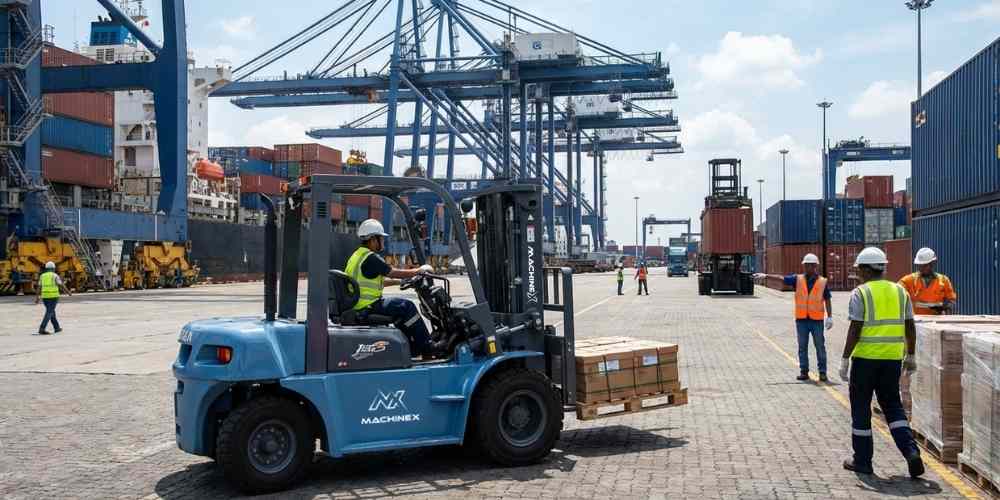
Coastal logistics environments present unique operational challenges that directly affect equipment performance:
- High temperatures affecting engine and battery efficiency.
- Humidity and salt air causing corrosion.
- Dust and rough terrain impacting machine durability.
- Continuous operations with minimal downtime.
Ports such as Port of Sohar, Port of Salalah, and Port of Dar es Salaam operate under these conditions daily.
Forklifts used in such environments must be built for endurance, power, and resistance to environmental stress.
Diesel Forklifts in Outdoor Coastal Logistics
Diesel forklifts are specifically designed for heavy-duty outdoor use, making them highly suitable for port and coastal operations.
Key Advantages of Diesel Forklifts
1) High Power and Lifting Capacity
Diesel forklifts are capable of handling heavy loads such as:
- Containers
- Steel materials
- Industrial cargo
This makes them ideal for large-scale logistics operations.
2) Performance in High Temperatures
Diesel engines perform reliably in hot environments, provided they are equipped with proper cooling systems.
In coastal regions like Oman and Tanzania, where temperatures can be extreme, diesel forklifts maintain consistent performance.
3) No Dependency on Charging Infrastructure
Unlike electric forklifts, diesel models do not require charging stations. This is a major advantage in:
- Large outdoor yards.
- Remote industrial locations.
- Continuous operations.
4) Durability in Rough Conditions
Diesel forklifts are built with:
- Rugged tires
- Strong chassis
- Heavy-duty component
This allows them to operate efficiently on uneven surfaces and dusty environments.
Electric Forklifts in Coastal Environments
Electric forklifts are designed primarily for indoor use, but some businesses consider them for outdoor logistics due to lower emissions and operating costs.
Key Advantages of Electric Forklifts
1) Zero Emissions
Electric forklifts produce no exhaust emissions, making them ideal for:
- Indoor warehouses.
- Environmentally controlled facilities.
2) Lower Noise Levels
They operate quietly, which is beneficial in certain environments such as enclosed logistics centers.
3) Lower Energy Costs
Electric forklifts can reduce fuel costs in operations where charging infrastructure is readily available.
Limitations of Electric Forklifts in Hot Coastal Yards
Despite their advantages, electric forklifts face several limitations in coastal outdoor environments:
1) Battery Performance in Heat
High temperatures can reduce battery efficiency and lifespan, leading to:
- Reduced operating time
- Increased charging frequency
2) Sensitivity to Moisture and Salt
Coastal environments expose equipment to humidity and salt air, which can:
- Damage electrical components
- Increase maintenance requirements
3) Charging Infrastructure Challenges
Electric forklifts require reliable charging systems, which may not always be practical in large outdoor logistics yards.
4) Limited Heavy-Duty Capability
Electric forklifts generally have lower lifting capacities compared to diesel models, making them less suitable for heavy cargo operations.
Diesel vs Electric Forklift: Direct Comparison
| Factor | Diesel Forklift | Electric Forklift |
|---|---|---|
| Outdoor Performance | Excellent | Limited |
| Heat Resistance | High | Moderate |
| Lifting Capacity | High | Moderate |
| Continuous Operation | Yes | Limited by battery |
| Maintenance in Coastal Conditions | Moderate | High (due to electronics) |
Which Forklift Is Better for Coastal Logistics?
For most outdoor logistics operations in hot coastal regions, diesel forklifts are the preferred choice.
Choose Diesel Forklifts If:
- You operate in ports or container yards.
- You handle heavy cargo.
- Your operations run. continuously.
- You work in rough or outdoor environments.
Choose Electric Forklifts If:
- your operations are primarily indoor.
- you require low emissions.
- you have reliable charging infrastructure.
- your loads are relatively light.
Real-World Use Cases in Oman and Tanzania
In major logistics hubs like:
- Port of Sohar.
- Port of Salalah.
- Port of Dar es Salaam.
Diesel forklifts dominate operations due to their:
- High lifting capacity.
- Durability in harsh environments.
- Ability to handle continuous cargo movement.
Electric forklifts are typically limited to indoor warehouse facilities within these regions.
Cost Considerations for Businesses
While electric forklifts may offer lower energy costs, diesel forklifts provide better value in outdoor logistics due to:
- Higher productivity.
- Reduced downtime.
- Better performance in demanding conditions.
For businesses operating in ports and construction sites, investing in diesel forklifts often results in better long-term returns.
Final Recommendations
For hot coastal environments in Oman and Tanzania, diesel forklifts are the most practical and reliable choice for outdoor logistics operations. Their ability to handle heavy loads, operate continuously, and withstand harsh environmental conditions makes them essential for port and industrial applications..
Electric forklifts remain valuable for indoor use, but their limitations in outdoor coastal environments make them less suitable for heavy-duty logistics operations.
Conclusion
The choice between diesel and electric forklifts ultimately depends on the working environment and operational requirements. In controlled indoor environments, electric forklifts offer efficiency and sustainability. However, in demanding outdoor settings—especially hot coastal yards—diesel forklifts provide the power, durability, and reliability needed to maintain smooth logistics operations.
For businesses evaluating diesel vs electric forklift for outdoor logistics, the decision becomes clear when considering real-world conditions: diesel forklifts remain the backbone of port and coastal logistics operations.